
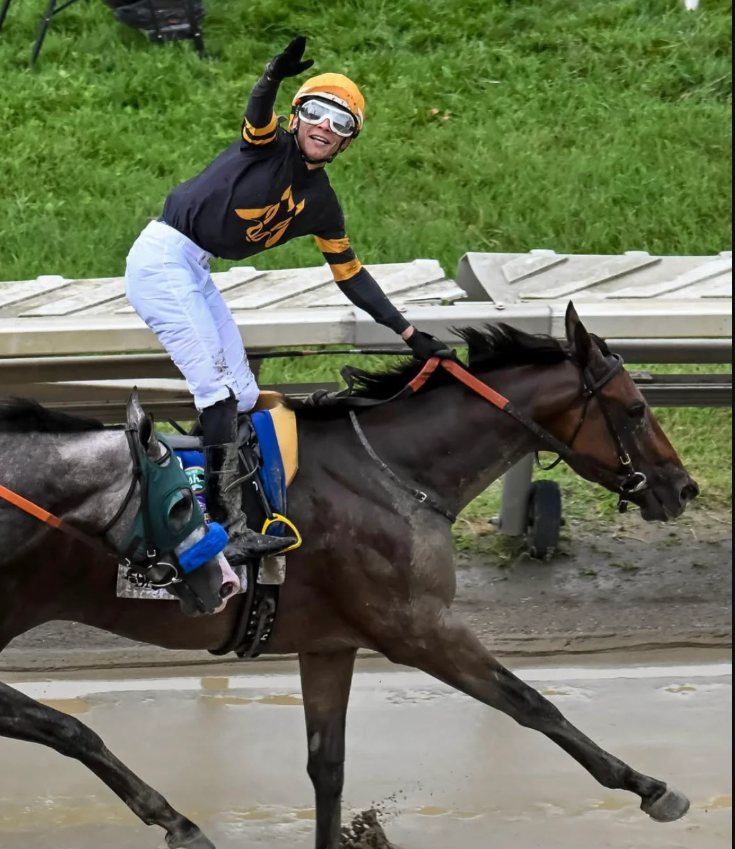
Horse racing silks are the colored jacket and cap a jockey wears so that everyone can tell whose horse is whose. A good jockey silk design uses strong color contrast, big simple shapes, and sleeves that look different from the body, so it can be read from far away. Modern silks are also made from stretchy synthetic fabric, not real silk, so they stay light and fit close to the rider. This guide walks through what goes into a set, from the first sketch to the moment your colors come out onto the track.
What Do Horse Racing Silks Actually Do?
Think of silks as your stable’s flag. In a race, you may have eight or ten horses running together, and the people watching want to know who is leading. Owners, fans, announcers, and camera crews all depend on those colors. If the design is weak, your horse can disappear in the pack. If it is strong, people notice it even before the announcer calls the name.
That is why the jockey silk design matters just as much as the horse’s gear. It is the one part of your racing operation that the whole crowd sees at the same time. Many owners treat it as a small detail, and then spend a season squinting at replays trying to spot their own colors.
Why Are They Still Called Silks?
The name is older than the material. Early racing colors really were made of silk, which was the lightest strong cloth available at the time. It was also costly, slow to dry, and easy to tear. As synthetic fabrics improved during the twentieth century, the sport moved on, but the word stayed.
What Makes a Jockey Silk Design Work?
The most useful rule is to think about contrast before color. Two shades that look different on your screen can turn into the same gray from the grandstand. A simple check is to picture your design in black and white. If the two main colors look the same, change one.
Strong pairs include yellow or white against navy, green, or maroon, and black or royal blue against white or pale yellow. Dark combinations such as red on navy tend to merge into one shape by the top of the stretch. Soft pastels look nice in the paddock but fade at distance, so they work best as small accents.
Pattern comes next. At speed, the eye picks up the overall color, the large shapes, and the sleeves. A solid body, a split body, wide hoops, a sash, or a couple of large chevrons will all hold up. Thin stripes and fine details blur together, especially on camera. Save logos and initials for the cap or sleeve cuffs.
Does Fit Really Matter for a Jockey?
Yes, and riders notice it more than owners think. A jockey works hard for about two minutes, usually in a helmet, a safety vest, and boots, and often in summer heat. If the silks trap heat, flap in the wind, or pull tight across the shoulders, that adds small irritations to a job that already demands full focus.
Older, loosely cut silks tend to fill with air and billow behind the rider like a sail. A closer cut in stretch fabric stays against the body. The stretch matters, because a close cut in a fabric that does not give would only bind the rider. Size also counts. A set made for a lighter rider will feel tight on a heavier one, while a set that is too big will flap. Always get a measurement or a size from the jockey or the trainer before you order.
How Are Custom Horse Racing Silks Made at Saratoga Silks Co.?
The company is based in Saratoga Springs, New York, and its founder, Michael Borisenok, has run a sportswear manufacturing business for 13 years. His family owns a farm that breeds thoroughbreds, which is how the two worlds came together. Everything is made in house, from start to finish, in the Saratoga Springs shop.
The process has four steps. First, you send your design. If you plan to race in New York State, that design must be approved by the Jockey Club before production. Second, the team matches fabrics to your color scheme and proposes options, and they can mail fabric swatches if you want to see them in person. Third, they make the silks using modern cutting and sewing methods. Fourth, you watch your colors run.
Some numbers are worth knowing. The website says it offers more than 1,000 shades, plus custom color strike-offs for something unusual. Swatches cost $9. Standard turnaround is listed as a few days, and a rushed order can be produced within 24 hours of proof approval and shipped next-day air, which can put silks in your hands in about 36 hours. A set typically costs between $320 and $380, depending on the design, and shipping averages $9 unless you ask for faster delivery. The company also makes matching blinkers, offers bulk pricing on request, and can ship to any track or trainer.
What Happens After You Place the Order?
The company saves your designs, colors, and logos, so reorders tend to move faster. That is handy if you want a second set or need a replacement after a season of hard racing. Keep in mind the terms, though. After payment is received, orders cannot be canceled or refunded, returns are not accepted, and changes to an approved design cost extra. Review your proof carefully before you sign off.
How Many Sets Should an Owner Think About?
There is no single answer, but a few situations are worth planning for. If you have more than one horse, you may have two running on the same day, and that needs two sets. A set can also get muddy, torn, or lost, and a spare avoids a scramble on race day. Many owners find that one extra set is cheap insurance compared with a horse that cannot run in its own colors.
What If Your Horse Draws In and You Have No Silks?
It happens more often than you would think. A race fills, a scratch opens a spot, and suddenly your horse is in and your colors do not exist yet. Many silks makers need two to four weeks, which makes this a real problem. A fast maker helps, but the better habit is to order before you need them. Have your design approved, your colors on file, and your trainer informed, so a short notice never turns into a missed opportunity.
Final Thoughts
Strong horse racing silks combine smart color contrast, bold shapes, a distinct sleeve and cap, and a well-fitted, breathable fabric. Plan early, check registration rules, and pick a maker who understands both the sport and the cloth. If you want to explore options, visit Saratoga Silks Co. and see how a custom design can become real, wearable colors.
FAQ
What are horse racing silks?
Horse racing silks are the colored jacket and cap that a jockey wears during a race. The colors and pattern identify the owner’s horse, so officials, fans, and cameras can follow it easily.
Are horse racing silks made of real silk?
No. Modern silks are made from polyester or a blend of polyester and spandex. Real silk was used long ago, but it was expensive, slow to dry, and easy to tear.
What makes a good jockey silk design?
A good jockey silk design uses two strongly contrasting colors, large simple shapes, and sleeves and a cap that stand out from the body. It should still be readable when shrunk to a thumbnail, and it should hold up in rain and under TV cameras.
How many colors should I use?
Three colors is usually plenty, and four is the limit. More than that adds noise and makes the design harder to read at speed.
How much do custom horse racing silks cost?
Pricing is based on the design, but the company says a set typically costs between $320 and $380. Shipping averages $9 unless you request expedited delivery, and bulk pricing is available on request.
How fast can I get my silks?
Standard turnaround is a few days. If you need them quickly, the company can produce them within 24 hours after you approve the proof and ship next-day air. Confirm exact timing when you order, since the website lists slightly different standard ranges on different pages.
Do I need approval to race in my colors?
Racing colors are registered, and two owners cannot share the same combination. In New York State, your design must be approved by the Jockey Club before production. Other states and racing commissions may have their own rules.
Can I see the fabric colors before I order?
Yes. The company offers more than 1,000 shades and sells color swatches for $9, which usually ship the next business day.
Can the silks be shipped to my trainer or the track?
Yes. Just let the company know before you place your order so the package arrives at the right place.
Can I get a refund if I change my mind?
No. Once payment is received, orders cannot be canceled or refunded, and returns are not accepted. Changes to an approved design carry an additional fee, so check your proof carefully.
