
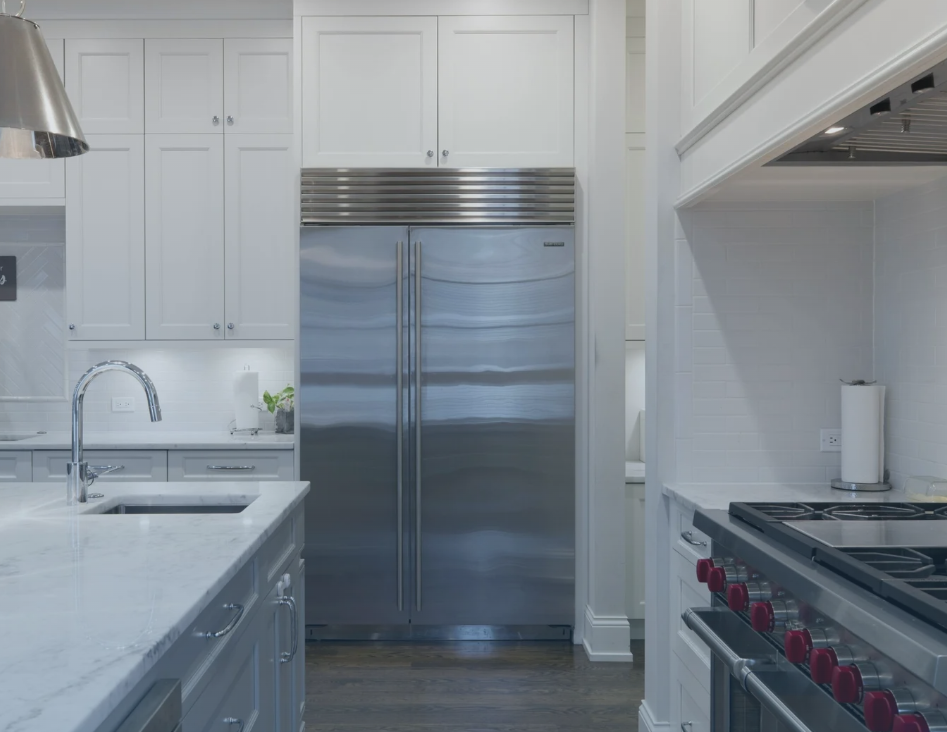
You open the fridge and the milk feels wrong. Not warm exactly, just off. A day later it’s confirmed: the freezer is soft-serve and the fridge is barely cooler than the kitchen. Before you start pricing new refrigerators, know that most cooling failures are fixable, and a decent number of them don’t even require a service call.
Start Here: The Two Checks That Solve Most Cases
Pull the fridge from the wall, or open the bottom kick panel on models with a front-access grille, and look at the condenser coils. If they’re coated in a felt of dust and pet hair, that’s your answer. Dirty coils can’t shed heat properly, so the compressor works overtime and the whole system falls behind. Vacuum them with a brush attachment, give the unit 24 hours to catch back up, and check again.
If the coils are clean, the next stop is airflow. Listen near the back panel inside the freezer. A working evaporator fan makes a faint whir. Silence there, especially paired with frost buildup on the back wall, usually means either the fan itself has failed or the defrost system isn’t cycling correctly, which lets frost choke off the airflow entirely.
That’s the whole game, honestly. Coils and fans account for a large share of “my fridge stopped cooling” calls, and both are inexpensive to fix compared to what people brace themselves for.
The Door Seal Nobody Checks
Close the fridge door on a dollar bill so it’s pinched between the seal and the frame, then pull. If it slides out with no resistance, the gasket has lost its grip and warm air is leaking in every time the compressor cycles off. Check a few spots around the door, not just one corner, since gaskets often fail unevenly near hinges.
A worn gasket is one of the cheaper fixes on this list, and it’s also one of the most overlooked, because the fridge still runs, just less efficiently, and the symptom (things a little warmer than they should be) creeps in slowly enough that people blame the thermostat instead.
When It’s the Compressor or a Refrigerant Leak
If coils are clean, the fan is spinning, and the door seals fine, but the compressor is dead silent or running constantly without ever catching up, the problem has moved into territory that needs a professional appliance technician with a manifold gauge set.
A refrigerant leak shows up as slow, gradual warming rather than a sudden stop, sometimes paired with a faint hissing sound near the back of the unit. Chasing a leak, brazing the line, and recharging the system is not a DIY afternoon. It requires EPA certification to even purchase refrigerant legally, and getting it wrong means paying for the same repair twice.
A failed compressor is the most expensive single-part failure on a refrigerator, and on units older than 10 to 12 years, most technicians will tell you honestly that replacement makes more financial sense than a compressor swap. That’s not a sales pitch, it’s just math: a new compressor plus labor can run close to half the price of a new mid-range fridge.
Don’t Ignore the Clock
Food safety guidance is blunt about this: a fridge sitting above 40°F for more than two hours puts perishables at risk. That’s not a “wait until Monday” problem if it’s Friday afternoon. This is exactly why same day appliance repair exists as a category of service rather than a marketing phrase. If your compressor is dead on a Thursday night, waiting five days for a scheduled slot can cost you more in spoiled groceries than the repair itself.
I’ve seen homeowners try to nurse a dying fridge along for a week with ice packs and a cooler, and it almost always ends the same way: a full grocery loss and an emergency call anyway, just later and angrier.
San Antonio homeowners who catch these signs early and call for refrigerator repair before the compressor gives out completely tend to spend far less than the ones who wait it out.
Frequently Asked Questions
Q: Why is my refrigerator running but not cooling?
A: The compressor being on doesn’t mean it’s actually cooling. Dirty condenser coils, a blocked evaporator fan, or a slow refrigerant leak can all leave the compressor running constantly while the interior temperature climbs anyway.
Q: How much does refrigerator repair usually cost?
A: Simple fixes like coil cleaning or a gasket replacement run $0 to $200. Fan motor repairs land around $150 to $250. Compressor or refrigerant work runs $300 and up, sometimes making replacement the better option on older units.
Q: Can dirty condenser coils really stop my fridge from cooling?
A: Yes, and it’s one of the most common causes on this list. Dust insulates the coils, the compressor overheats trying to compensate, and cooling capacity drops even though every part is technically still working.
Q: Is it worth repairing an old refrigerator?
A: Depends on the part and the age. A gasket or fan on a 12 year old fridge is still worth fixing. A compressor or sealed system failure on a unit that old usually isn’t, since you’re paying major-repair money on a machine near the end of its expected life anyway.
Q: How fast can a technician usually get to a refrigerator that’s completely dead?
A: Companies that offer same day appliance repair typically prioritize refrigerators specifically because of the food-spoilage clock, often getting a technician out within hours of the call rather than days.
Bottom Line
Clean the coils and check the fan before you assume the worst. Those two checks resolve more cases than any other advice on this list, and they cost you nothing but ten minutes. But if the compressor’s gone quiet or the fridge is running nonstop without catching up, stop troubleshooting and get a professional appliance technician out before the groceries do.
